
Manufacturing 4Matic Brand Pneumatic Actuator
Pneumatic actuators use air power to produce rotary and linear motion. In the broadest sense, an air cylinder is a pneumatic actuator. For the purpose of this article, we focus on pneumatic actuators that are designed to produce rotary motion for operating valves, automating manufacturing processes, and clamping work.
As a leading Pneumatic Actuator Manufacturer, we offer many types of pneumatic actuators, but two of the most common types are Single Acting and Double Acting.
The single acting actuator is also known as the spring return actuator because it has a spring and requires only a one-sided compressed air supply. The compressed air pushes the actuator to either open or close.
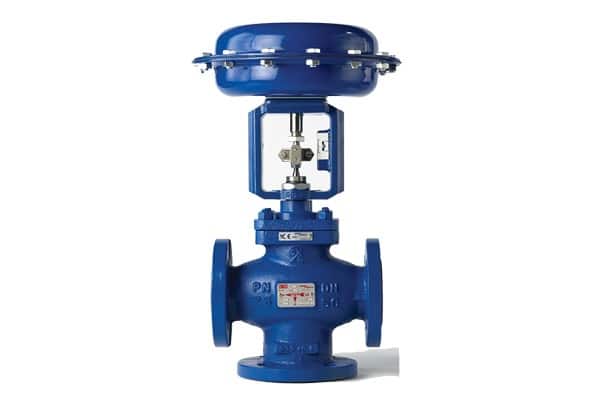
When the air supply stops, the spring returns the actuator to its original position. The double acting actuator needs a two-sided air supply to open and close. The pneumatic air system is cost-efficient, spark-free, and sustainable in hazardous and flammable environments compared to other energy sources. Pneumatic Rotary Actuator rotates 90° to 180° to operate the valve using only compressed air.
It has low cost and low maintenance, which saves electricity and provides faster movement compared to motorized actuators. Pneumatic actuators are spark-free, making them easily usable in hazardous environments and safe for atomic plants. They offer smooth working without any extra noise.
Pneumatic Actuator / Pressure Reducing Valve – Key Features
- Works only on compressed air (pneumatic energy)
- No electrical connection needed for basic operation
- Available in Single Acting (spring return) and Double Acting configurations
- Rotation range of 90° to 180° to operate valves
- Fast and smooth operation with minimal noise
- Spark-free design, suitable for hazardous and flammable environments
- Strong body construction (aluminum/cast iron depending on model)
- Designed for continuous industrial use with corrosion resistance
- Valve automation (ball, butterfly, gate valves)
- Industrial automation lines
- Hazardous area applications (oil & gas, chemical plants)
- Low cost and low maintenance compared to motorized actuators
- Saves electricity with faster movement
- Safe for use in atomic/nuclear plants due to spark-free operation
Key Specifications
| Specification | Details |
|---|---|
| Actuator Type | Single Acting (Spring Return) / Double Acting |
| Rotation Angle | 90° / 180° |
| Operating Medium | Compressed Air (Pneumatic) |
| Air Pressure Range | 3 – 8 bar (40 – 120 psi) |
| Operating Temperature | -20°C to +80°C |
| Body Material | Aluminum Alloy / Cast Iron / Stainless Steel |
| Mounting Standard | ISO 5211 |
| Torque Output | 10 Nm to 10,000 Nm (model dependent) |
| Air Connection | 1/4″ to 1/2″ BSP/NPT |
| Certification | CE, ISO 9001 |
FAQs
Pneumatic actuator is defined as the device which produces rotary or liner motion with the help of compressed air. It is widely used for controlling valves especially in industry.
Single acting actuator utilizes spring to go back to initial position and it requires air supply from one side only, while double acting actuator needs air supply from both sides to get opened and closed. Also, it doesn’t use spring.
The pneumatic actuators typically make a rotation of 90° to 180° depending upon the kind of valve and requirement of the application. al position and it requires air supply from one side only, while double acting actuator needs air supply from both sides to get opened and closed. Also, it doesn’t use spring.
Due to its free from spark technology, pneumatic actuators can be operated in locations with high flammable materials like oil and gas facilities and chemical plants.
Important Keywords
Pneumatic actuators
Pneumatic actuators Manufacturer
Pneumatic actuators in India
Pneumatic actuators distributer