
Best Pilot Operated Pressure Reducing Valve in Manila, Philippines
We manufacture and supply Pilot Operated Pressure Reducing Valves that provide accurate and stable pressure control. These valves combine the essential components of a direct-operated valve—such as the plug, seat, diaphragm, and spring—with an additional pilot regulator for improved performance.
The pilot uses an external sensing line connected to the downstream pipeline. This allows it to measure the actual outlet pressure away from flow turbulence, ensuring more accurate pressure control.
The pilot regulator works with the main valve assembly and uses an external sensing line connected to the downstream pipeline. By sensing pressure away from the turbulence created by the valve, the system can provide more accurate pressure control and help maintain consistent outlet pressure.
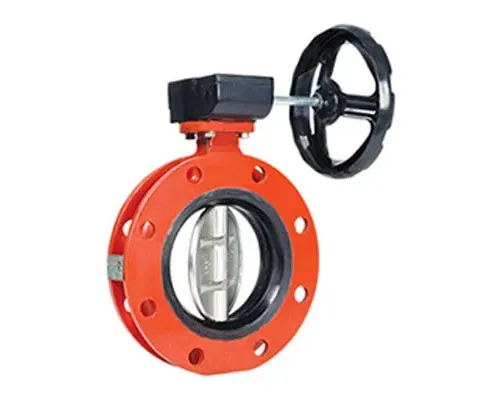
How Does a Pilot Operated Pressure Reducing Valve Function?
Pilot operated pressure reducing valves makes use of a pilot regulator that controls the functioning of the main valve. When fluid passes through the valve, the pilot regulates the pressure downstream through an external sensing line. In case of change in downstream pressure with respect to the set point, the pilot acts and brings changes in pressure at the main valve diaphragm.
In this way, the main valve opens or closes and ensures that the flow is regulated and helps to maintain the required downstream pressure. Since the sensing line is connected to the downstream pipeline, and not close to the valve where ta here will be turbulence, the pilot obtains an accurate pressure value.
Direct vs Pilot Pressure Reducing Valves
The direct pressure reducing valve makes use of the main valve’s diaphragm and spring arrangement to sense changes in the downstream pressure directly.
The pilot-operated pressure reducing valve involves adding a pilot regulator along with an external sensing arrangement to the system. This ensures that the pilot-operated pressure reducing valve is better suited for pressure control systems.
Why go for Pilot Operated Pressure Reducing Valves?
- Accurate Pressure Control: Built to ensure constant downstream pressure with increased control accuracy.
- Controlled by Pilot: The presence of an extra pilot ensures effective reaction and control of the valve.
- Pressure Measured from Outside: A sensing line ensures measurement of downstream pressure outside the area of turbulence.
- Consistent Functioning: Facilitates maintenance of constant pressure at the outlet despite variations in operating conditions.
- Valve Design Features: The design includes important components such as the plug, seat, diaphragm, spring, and pilot regulator.
- Industrial Applications: Effective for pressure control applications requiring consistent and reliable functioning.
- Quick Pressure Response: The pilot arrangement ensures an efficient response to changes in downstream pressure.
- Industrial Process Systems:
Used to maintain controlled pressure in process pipelines and fluid-handling systems. - Water Distribution Systems:
Suitable for regulating pressure in water supply and distribution networks where stable downstream pressure is important. - Steam Systems:
Can be applied in steam pressure-control systems when the valve construction and specifications are suitable for the operating conditions. - Gas Handling Systems:
Useful for applications requiring controlled and consistent gas pressure downstream of the valve. - Chemical Processing Plants:
Can be selected for chemical process lines where precise pressure regulation and appropriate material compatibility are required. - Manufacturing Facilities:
Helps maintain suitable pressure conditions for equipment and production processes that depend on controlled fluid flow.
- Improved Pressure Control:
The pilot regulator offers improved downstream pressure control, making it useful for applications that require stable and consistent pressure. - Precise Pressure Sensing:
The external sensing line enables the pilot to detect actual downstream pressure away from turbulence near the valve. - Stable Downstream Pressure:
The valve helps maintain stable downstream pressure by reducing pressure fluctuations within the pipeline. - Reliable Performance Under Variable Conditions:
The valve can operate effectively even when upstream pressure and flow rates change. - Prevention of Downstream Overpressure:
Controlled pressure delivery helps protect downstream components from excessive pressure. - Suitable for Pressure Control Applications:
The pilot-operated design makes these valves a reliable choice for applications that require precise and consistent pressure reduction.
Product Related FAQs
These valves can be applied in enterprises that use water, steam, gas, chemicals, manufacturing and various industrial process systems that require pressure regulation downstream.
The major benefit is that pilot-operated valves provide accurate pressure regulation and stability in the process, thanks to the fact that pilot operation improves pressure regulating and measuring processes downstream.
Yes, because Pilot Operated Pressure Reducing Valves provide proper pressure regulation downstream. However, correct selection and sizing of the valve should be done according to system specifications.
Selection parameters should include type of fluid, inlet pressure, outlet pressure, flow rate, temperature, size of pipes, pressure range and type of materials used to manufacture the valve.
Yes, because Pilot Operated Pressure Reducing Valves can be used in various industries in order to achieve accurate and reliable pressure regulation.